Skip to the life of Datta Kaka

Namyogi

1942 — 2012

Datta Kaka

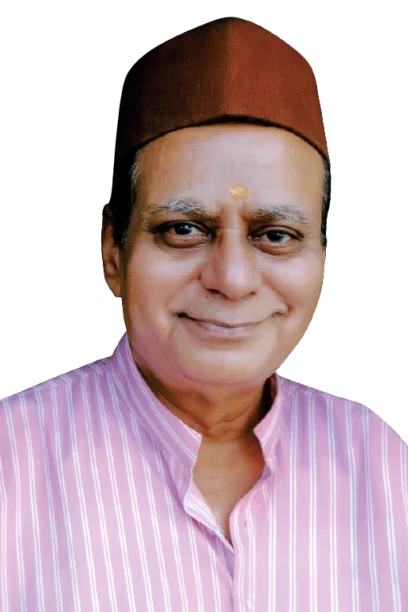
Portrait of Datta Kaka, Dattatray Pundalik Kulkarni

Place the world as it is!

A saint of the common man

Dattatray Pundalik Kulkarni

1942 — 2012

He reached the peak of happiness very early in his life, and then spent the rest of it helping others climb.

In brief

Who he was, for anyone arriving with a question

Who was Datta Kaka?

Datta Kaka (Namyogi Dattatray Pundalik Kulkarni, 10 July 1942 – 17 May 2012) was a saint of the common man from Maharashtra, India. Born in Chikhali, District Buldhana, he was a disciple of Brahmachaitanya Gondavlekar Maharaj of Gondavale (Satara). He served in LIC of India, rising from Assistant to Zonal Manager, and spent his life teaching people to chant Ram-Nam and live happily.

What did Datta Kaka teach?

His core teaching is Take Naama, Be Happy: chant the divine name of Rama, notice God's hand in ordinary life, and happiness becomes available without first changing the world. He called the skill of using life's given qualities in the right proportion the Midas Touch. He did not create followers; he asked people to become Happiness Seekers — "Don't copy the master, follow his consciousness."

What is Ram-Nam according to Datta Kaka?

Ram-Nam (Rama Nama, also written Naama) is remembering God by chanting the name श्री राम जय राम जय जय राम. Datta Kaka taught that no temple or tomb can rescue you — only the Nama you take. Chanting delinks you from restless worldly identification and links you with the Supreme, making a person wiser, more relaxed, and able to thank God for whatever is happening.

Who was Datta Kaka's guru?

His guru was Shri Brahmachaitanya Gondavlekar Maharaj of Gondavale, District Satara, Maharashtra. Datta Kaka received anugraha (ordination) at age seven. When Shri Maharaj asked, "Will you follow me?" he answered, "I will follow you and only you," and kept that vow for life.

What books did Datta Kaka leave?

His talks were compiled as Datta Kakanshi / Bhaiyyanshi Sukhsanwad (Pleasant Conversation with Datta Kaka), a series of 22 parts, originally in Marathi and partly translated into Hindi, English, Kannada and Bengali. Named titles include Let Understanding be the Law, Excuse Taxes, Misery Killing, Yash Express, and study guides for 10th and 12th standard students.

How can someone practise Datta Kaka's happiness formula today?

Take the Name and remain in joy: नाम घ्यावे आनंदात असावे / नाम लें व आनंद में रहें. Place the world as it is. Change yourself rather than demanding that the world change first. Go to the top in whatever you do. Give everyone the credit for your happiness. He summarised the attitude as: Jo Chahe Ho Jaye — enjoy; let anything happen, and still enjoy, because the best is happening.

The Philosophy

Happiness through Ram-Nam

Philosophy

Happiness is the ultimate value

Being happy is the ultimate value of a living human. A human being's every action is meant towards making oneself happy.

There are people who not only achieve ultimate happiness in their lives, but who help others live a happy, frictionless, smooth life. These human beings are called 'Saints'. Since they know the path to reach the peak of happiness, they have a right and an authority to help others come to that peak.

Who was Datta Kaka

Datta Uncle

Datta Kaka (Datta Uncle) was such a person who not only reached the peak very early in his life span, but then spent the rest of his life helping others. Right from the beginning of his life, his focus was on understanding life so that living becomes happy and smooth for himself and others.

He was a follower of Brahmachaitanya Gondavlekar Maharaj from Gondavle, District Satara. His teachings are very easy, universal, time-tested, and very much practical — and so it is easy to follow them and achieve the peak of happiness.

His teachings

The Midas Touch

Sugar is always sweet, salt is salty, chilli is spicy, bitter gourd is bitter, lemon is sour.

To a few this is a problem, and a point to complain: why is bitter gourd so bitter, why is salt so salty? But a seasoned chef, instead of complaining about the phenomenon, uses them to make food that is tasty, satisfying to the taste buds, aromatic and finger-licking. He learns to use the right amount of salt with spices, a pinch of sugar, and a drop of lime. He learns that by applying salt on bitter gourd a big amount of the bitterness is removed — and so even bitterness is made tasty.

He used the example to explain how life can be made beautiful, and living smooth and happy, just by learning and using the characteristics of life in proper proportion. So the point of complaint actually becomes a point to cherish and enjoy. This learning he used to call the 'Midas Touch' in life.

This understanding and acceptance of the Midas Touch is possible by chanting 'Ram Nam'. So in a nutshell, his teaching indicates that merely by chanting Ram Nam and trying to learn about life, any life is made easy, smooth and full of happiness.

The point of complaint actually becomes a point to cherish and enjoy.

How

God's hand in the everyday

According to him, understanding this means experiencing God's hand in our day-to-day life, which gives solace to the human being. His reactions and consequent actions are changed, making that person a different and hence a happy personality, whose world changes to a Happy World.

The tool he prescribed to experience God's hand in one's life was remembering God by chanting his divine, pure and loving name — and thanking him for whatever he is doing in your life.

The Formulae

Producer of happy generations

Happy generations

A saint of the common man

According to Datta Kaka, Gondavle is a producer of happy generations — and Datta Kaka himself was a happy soul of Gondavle's own production. He devised many formulae for happiness, and guided and dictated many books on happiness for the common man in his problems.

He was a saint of the common man. No issue of a common man's life was left unsolved by him, always through practical and easily doable solutions. He used to speak Hindi, English and Marathi.

Datta Kaka’s happiness formulae

Seven sentences, elaborated for a lifetime

  1. The Ram who wishes to live in a temple only, and is afraid to come to your house, into your day-to-day problems, is practically of no use — even to worship by visiting the temple.

    Divinity belongs in your everyday life.

  2. One who needs happiness can always get it at any moment.

  3. No temple can help you, no tomb will help you; only Nama taken by you will come to your rescue.

  4. There is no need to change the world which is experienced as disturbing to your happiness. But if you change, then you will find that the same world has changed and become a different world — a Happy World.

  5. Without needing a change in the given situation, Ram Nam can make you happy.

  6. Vacancy at the top, crowd at the bottom.

  7. Going to the top in whatever you do is the key to achieving all in life, instead of going after many things simultaneously.

  8. Don't copy the master, follow his consciousness.

    The best part of his teachings was that he did not create followers, but encouraged them to become Happiness Seekers.

His sentencesPlace the world as it isAll 24, in English, Marathi and Hindi
  1. Place the world as it is!

  2. नामस्मरण म्हणजे मी नाही, तू आहेस!

    Naam-smaran means: not I, but You.
  3. आशा कोणाला दाखवू नये व कोणाची धरू नये!

    Hold out hope to no one, and pin your hopes on no one.
  4. समजणे आणि पटणे ह्यात फार फरक आहे.

    There is a great difference between understanding a thing and being convinced by it.
  5. लोकांना दुःख कमी देणे हाच परमार्थ!

    To cause people less sorrow — that itself is Parmartha.
  6. नामस्मरण म्हणजे कल्याण - आपले आणि आपल्या माणसांचे!

    Naam-smaran is wellbeing — your own, and your people's too.
  7. सुखाचे credit सर्वांना द्यावे!

    Give everyone the credit for your happiness.
  8. भगवंताचे नाम म्हणजे स्वतःचे delinking जगा पासून, आणि linking परमात्म्याशी.

    God's Name is a delinking of yourself from the world, and a linking to the Supreme.
  9. खंत करू नका, खंत नसणे हे समाधान!

    Do not grieve. To be without regret — that is contentment.
  10. उपासना म्हणजे स्वतः आनंदात राहून लोकांच्या आनंदात भर घालणे!

    Upasana means staying joyful yourself, and adding to the joy of others.
  11. एकदम सात्विक होणे कदाचित शक्य होणार नाही.

    To become wholly satvik all at once may simply not be possible.
  12. No talking is not मौन, but no thinking is मौन!

    मौन — silence.
  13. सर्वांनी जर सतत एक-मेकांच्या मना सारखे वागले तर जीवन निरस होईल!

    If everyone always behaved exactly as others wished, life would lose all its flavour.
  14. It is better to have known enemies than unknown friends!

  15. पुस्तकात ज्ञान आहे पण पुस्तक ज्ञानी नाही!

    There is knowledge in a book, but the book is not wise.
  16. परमार्थात liveliness is must!

    In Parmartha, liveliness is a must.
  17. श्री राम जय राम जय जय राम म्हणजे energizer...synergizer!!

    Shri Ram Jai Ram Jai Jai Ram — an energizer, a synergizer.
  18. आपला प्रपंच हा परमार्थाच्या सोई साठी असला पाहिजे!

    Our worldly life should be arranged for the convenience of Parmartha.
  19. Introvert चे extrovert व्हा! मोकळे पणाने रहा. आनंद द्या, आनंद घ्या.

    Turn from introvert to extrovert. Live openly. Give joy, take joy.
  20. नामस्मरण करतांना प्रत्येक वेळी म्हणा - मी सुखी आहे!

    Each time you chant the Name, say — I am happy.
  21. फालतू विचारांनी, निरर्थक चर्चेनी नामाला leak out करू नका!

    Do not let the Name leak out through idle thoughts and pointless talk.
  22. Take Naama, Be Happy

  23. नाम घ्यावे आनंदात असावे

    Take the Name, and be in joy.
  24. नाम लें व आनंद में रहें

    Take the Name, and live in joy.

The memory field, at rest

A happiness bubble, and anyone who came into its radius

The Life

Glimpses, for those who believe in history

Glimpses of life

He will remain alive through his teachings

Though he will remain alive through his teachings, his works, and the pure love showered by him on many during his life — and still continues through his remembrance — for those who believe in history, here are some glimpses from his life.

Family

Chikhali, July 10, 1942

Mr. Pundalik and Mrs. Indira Bai Kulkarni were blessed with their third child, who was named 'Dattatray', in a small town named Chikhali (District Buldhana) on July 10, 1942.

He was later popularly known as DP Kulkarni among his colleagues, DP to many of his fellow Guru-Bandhus, Datta Bhaiyya for peers, Datta Kaka for youngsters, Kulkarni Saheb to LIC people, Nam ghenare (Nam Chanting) Kulkarni, Datta Aaba for children, Datta Ajoba, Namyogi Datta Kaka for disciples, Nampremi Datta Bhaiyya, and so on.

There were four siblings — the eldest being Mr. Janardan (aka Bapusaheb), then Mr. Vasudev (aka Babasaheb), then Datta Kaka himself, and his beloved younger brother Mr. Govind.

Anugraha

I will follow you, and only you

The entire family was a staunch follower of Shri Gondavlekar Maharaj (Shri Maharaj). At the tender age of seven, Datta Kaka received ordination — दीक्षा in Hindi, अनुग्रह in Marathi — from Shri Maharaj.

Then happened a meaningful event. Shri Maharaj asked this kid, “Will you follow me?” — to which he firmly replied, “I will follow you and only you.” This was literally followed, in words and in spirit, by Kaka all through his life.

At that moment itself, Kaka knew that it was only Shri Maharaj who understood him inside out, who was capable of guiding him and helping him attain the ultimate goal of life — Satchidaananda.

I will follow you and only you.
Datta Kaka, aged seven

Personality

A happiness bubble

Datta Kaka grew up into a tall man with a positive aura around him, as if a happiness bubble was there, and anyone who came into his radius could experience divine happiness, contentment and solace.

His smiling voice and assuring words were such a delight to the ears of many. His kind and honest eyes were such that the one who looked into them could see immense love and care of Kaka for that person, as well as a reflection of one's own deeds.

Career

From A to Z

Datta Kaka joined LIC of India and started his career from A (Assistant), reaching Z (Zonal Manager) by continuously upgrading himself through continuous learning and internal exams.

He used to be so punctual that people literally set their watches by seeing Kaka going to office. He was dutiful, particular about everything, and a smart officer, as he lived by his philosophy — a hero is a hero in all walks of life. All of his virtues got his colleagues saying: he is the gem of our office.

He served in various parts of India covering Ahmedabad, Dhule, Indore, Bhopal, Kolkata and more, and attended a seminar in Japan on behalf of LIC. He retired as Zonal Manager in 2003.

A hero is a hero in all walks of life.

Glimpses of a life

  1. 1942

    Born at Chikhali

    July 10. Third child of Mr. Pundalik and Mrs. Indira Bai Kulkarni, in a small town in District Buldhana. Named Dattatray.

  2. Age 7

    Anugraha

    Receives ordination from Shri Maharaj, and answers his question with: I will follow you and only you.

  3. LIC

    From A to Z

    Joins LIC of India as an Assistant and rises to Zonal Manager. Serves in Ahmedabad, Dhule, Indore, Bhopal, Kolkata and more.

  4. 1981

    Samuhik Upasana begins

    At Indore, collective worship every Sunday from 9 to 10 am. Upasana Kendras begin to spread across India.

  5. 1983

    The Paduka

    Shri Dinu Mama Ketkar offers the holy footwear of Shri Maharaj to Datta Kaka.

  6. Hari-Haat

    Thirteen crore

    A Hari-Haat at Mandleshwar celebrates the completion of the resolution of chanting Ram-Nama 13 crore times.

  7. 1993

    Emergence of Datta Maharaj

    The Utsav at Buldhana becomes a grand pilgrimage. He begins giving anugraha to all who ask, without reservation.

  8. 2003

    Retires as Zonal Manager

    His colleagues say: we received fatherly affection from him. His work of helping people only accelerates.

  9. 2012

    Samadhi

    May 17. “I will remain alive in your smile.”

The Mission

Ram-Seva, and a family of thousands

Ideology

A life given to Ram-Seva

He had a strong determination to devote his life to serve Rama (Ram-Seva) and to take forward the work of Shri Maharaj, encouraging people in the adoration of God. The commitment for the said mission was so powerful that he stayed a bachelor.

Besides office and rest hours, he used to continuously chant Rama-Nama. He read, meditated on and contemplated the literature of Shri Maharaj — Shri Sadguru Lilamrut and The Discourses of Shri Maharaj — listened to audio cassettes of Shri Baba Belsare, took notes, and focussed on continuous learning. Meanwhile many people visited him and received guidance. He contributed his service to the Hospitality Department in Utsavs held at Malad and Gondavle, and took incessant Nama.

His spiritual family

Thousands of members, different surnames

Rather than limiting himself to starting and maintaining his own family, he had a big family of thousands of members with different surnames and separate addresses.

He maintained a fine work-life balance and taught the ambitious generation that it was not required to let go of their ambitions, desires and dreams to be able to do Parmartha. Rather, Datta Kaka set an example by doing Parmartha and achieving everything in life simultaneously — indicating that taking Nama and being successful in Parmartha has an overflowing effect on Prapancha. Again proving: a hero is a hero.

He ignited the urge in an individual to become successful, guided them continuously on how to study well and appear in competitive exams, to 'Go on TOP', and how to live a permanently happy life in the remembrance of God. He used to say that Parmartha is not a credulous person's cup of tea — one has to be smart and intelligent to be able to see and acknowledge God's hand in one's life. And even if one is not smart enough, the beauty of chanting Ram Nam is that it makes the chanter smarter and wiser, to experience God in life and so become very relaxed and contented. It is the easiest, safest and cost-free method to become smart and wise in life.

The one-stop solution provider

Teaching the art of fishing

By listening to the problems of people and giving solutions, he made their minds free of internal friction. This in turn made them smarter and more receptive to God's role in their life. When one gets a solution to his problems, he is ready to invest his time in doing productive things. This way his mind becomes open and happy — and a happy soul would automatically take Nama and thank God for all his blessings.

He believed in the philosophy of teaching the art of fishing rather than feeding with a fish. So initially he seemed to give solutions to one's problems, but later the person themselves, with an open and receptive mind aided by Nama and blessings, could find solutions and become an independent Happiness Seeker.

He never believed in, nor encouraged, superstitious activities or irrational behaviour, and never suggested any solution that was anything but easy to follow. He and his teachings were, and are, very practical, logical and sustainable — time-tested, universal, and very much achievable.

Pan-India Samuhik Upasana

Every Sunday, nine to ten

During his stay at Indore from 1981, he started Samuhik Upasana (collective worship) every Sunday from 9 to 10 am. People used to besiege Kaka after upasana to listen to the stories and learnings he shared about Shri Maharaj. His knack of telling about the ease of doing Parmartha in a super practical way, in the most easy words, helped many youngsters achieve on both dimensions of life — Prapancha as well as Parmartha.

As a token of acknowledgement of his work, in 1983 Shri Dinu Mama Ketkar (son of Shri Tatya Saheb Ketkar) offered the holy footwear (Paduka) of Shri Maharaj to Datta Kaka, which he endured with the expected sense of responsibility, love and care.

Every bee — every human being — that came near Kaka got the divine nectar of Ram-Nama. He gave the formula: take Nama and be happy. Where there is happiness, there is Maharaj, hence earn, sustain and increase happiness. Happiness is something which, when given out, does not reduce in the giver's hand, and when received does not fall short in the receiver's hand.

His eyes were never judgemental, rather benevolent and ready to shower blessings even on those who were not welcomed by society. He accepted them and helped them take Nama and be happy. Many people changed in his company, their ill habits got cured, they learnt how to live a happy life, their homes became heavens. He never publicised Nama, but spread the urge to take Nama and be happy.

Happiness does not reduce in the giver's hand, nor fall short in the receiver's.

Hari-Haat at Mandleshwar

A fun-fair for God

In Kolkata, Shri Maharaj had conducted Hari-Haat — a sort of fun-fair — wherein people worshipped God in the way they wanted to: humming holy songs, bhajans, Sanskrit canticles, Ram-Nam, playing fugdi, cooking various delicacies for God and then donating the same as prasaad to those present.

In the same way, a Hari-Haat was organised at Mandleshwar (Madhya Pradesh) on the completion of the resolution of chanting Ram-Nama 13 crore times. Such fairs were a celebration of the accomplishment of a Sankalp, as well as a motivation for the next.

People started loving chanting Nama and requested Kaka to visit their homes and give them a chance to welcome him. This way many Upasana Kendras (centres for prayer) came into existence, where people continued the practice of praying, becoming happy, and making others happy. Kaka guided how the format of prayer should be — a fine blend of Jaap, prayer, and reading of the Discourses by Shri Maharaj. He ensured monotony was avoided and welcomed innovative ideas to make Upasana more enjoyable.

The theme of this activity was that when like-minded people unite for one resolution, a Group Power comes into existence, and that power helps generate positive and happy vibrations, which ultimately attract more positivity and happiness — the real hunger of any living thing.

Emergence of Datta Maharaj

Buldhana, 1993

Now Datta Kaka was not just an uncle for people; his divinity was overflowing, bestowing upon others all the blessings and divine complaisance (anugraha). This became more evident in the Utsav of Buldhana in 1993, conducted on the accomplishment of the resolution of chanting Rama-Nama. It became a grand pilgrimage.

A grand cortege was happening, with the portraits of Shri Maharaj and Shri Prahlad Maharaj in a palanquin, where various people urged Datta Kaka to give them anugraha. Kaka knew his role, and understood that all the people could not afford to go to Gondavale — and in case going to Gondavle got prolonged, why waste that time? Rather one should start taking Nama as soon as possible, as soon as one's conscience allows one to align with Maharaj.

So Kaka did not avoid giving people anugraha. Every segment of humanity wanted to be part of Kaka's circle — be it poor or rich, man or woman, aged or a kid, wise or ignorant, be it anyone. Kaka accepted everyone without any reservations.

Datta Kaka's Pandora box

The magical ingredient was humour

One thing ignites curiosity: what was it that brought so many people, of different ages, genders and intellectual levels, to Kaka? It was his knack of telling Shri Maharaj's teachings and the importance of chanting Rama-Nama against the backdrop of contemporary happenings, technology, and relatable work-related experiences. Since he had himself lived by the teachings of Shri Maharaj, he knew every nuance of how applying them helps one in every walk of life.

The magical ingredient of his training was humour. He used to explain deep and enigmatical concepts of Parmartha by citing simple humorous situations from our day-to-day lives. This not only solved day-to-day problems but also helped increase faith in Shri Maharaj. Anyone who came to Kaka with problems and teary eyes would leave with a broad smile on his face, and confidence and love at heart.

He used to say: “My job is done, there is no need to get upset and disappointed by little things in life. We make a fuss of little things out of our imagination, which leads only to disappointment, and we stay devoid of the Real Happiness which is out there for us. We should remove the needle of a negative thought by simply providing another needle of a positive, happy thought — and thus both needles slip away.”

A family of thousands

Different surnames, separate addresses, one resolution

The Words

Twenty-two parts of pleasant conversation

Literary works

Sukhsanwad

The stories, memories and learnings of Shri Maharaj shared by Datta Kaka were compiled into books and published under the series “Datta Kakanshi / Bhaiyyanshi Sukhsanwad” — Pleasant Conversation with Datta Kaka. Twenty-two parts of this series have been published so far.

How to deal with internal questions, materialistic or spiritual; how to behave in everyday life while protecting our happiness; how students should undertake their studies so as to achieve their goals; how the youth should go to the top of their field; how the relationships of a family may be nurtured with understanding and love, be it husband and wife or mother-in-law and daughter-in-law; effective parenting — all these aspects and more have been threaded into his books.

Originally written in Marathi, some of these books have been translated into Hindi, English, Kannada and Bengali. Since the books were written and compiled by different individuals, it benefited them too: in the process of compiling, they got to experience the teachings of Kaka.

The series

Datta Kakanshi / Bhaiyyanshi Sukhsanwad

Pleasant Conversation with Datta Kaka

22parts

Titles

  • Let Understanding be the Law
  • Excuse Taxes
  • Misery Killing
  • Yash Express
  • Study guides for students of the 10th and 12th standard

Languages

  • Marathi
  • Hindi
  • English
  • Kannada
  • Bengali

The Fragrance

I will remain alive in your smile

A father figure

We received fatherly affection from him

On the eve of his retirement from LIC of India, his female colleagues expressed their gratitude for what Kaka had taught them during his tenure, and said: “We received fatherly affection from him.”

After retirement his work of helping people geared up, and he tried to use every second of his life to meet people throughout India, to spread Nama and Shri Maharaj's teachings, the happiness formulae, and his guidance. He continuously suggested that very little time is left — get benefitted as soon as, and as much as, possible. He did not care for his physical health, but gave every bit of it to the divine work with which he was entrusted by Shri Maharaj.

Samadhi — May 17, 2012

The scent on your wrist

One who has come to this world has to leave it one day or another. That is the rule of this world. But Kaka has made a difference in so many lives by being alive through his teachings, his guiding words, his happiness-oriented thoughts, and the attitude one should behold to be able to be happy and make others happy.

He used to say: “If you put a scent on your wrist, people will enjoy the aroma — and since the wrist belongs to you, you can enjoy the fragrance any time.” Though he left this world physically on May 17, 2012, he stays alive in our hearts even today. He had specifically mentioned: “I will remain alive in your smile.”

It is said that saints are not limited to their physical existence, but remain alive through their teachings. One who implements those teachings in one's life can experience how the Guru's mighty hand is continuously helping him, making him happy, taking him towards permanent happiness. One should hold on to the rope of faith and enjoy the allotted lot — because for him, only THE BEST IS HAPPENING.

I will remain alive in your smile.

His formula

Take Naama, Be Happy

नाम घ्यावे आनंदात असावे

नाम लें व आनंद में रहें

Jo Chahe Ho Jaye… ENJOOOOYYYY!!

Let anything happen — enjoy.

On YouTube

See him. Hear his voice.

Recordings of the upasana, his own reading of the Sadgurulilamrit, and the gatherings still held on his birthday every July. There is more on the channel than fits here.

Everything is on the channel — subscribe, and the new recordings will find you.

Visit Datta Kaka's Guidance

youtube.com/@dattakakasguidance

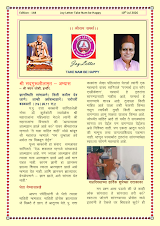
Joy Letters

A letter, every month, since 2014

On the tenth of every month — the day he was born on — the Joy Letter goes out. A column in his own words, the experiences people write in with, answers to the questions they ask, and news from the upasana kendras. It began in August 2014 and has not missed a month since.

All 145 editions are here to read, from August 2026 back to the very first.